It is not youth that changes the world, but the willingness to take the first step — and that is when the world begins to change.
Sixteen young people from Taiwan, aged 18 to 30, carried a passion for public health, a heart ready to listen, and a faith that they could do something meaningful for the world. They crossed more than two thousand kilometers of ocean to reach Palau, Taiwan's ally in the South Pacific, for a 14-day community health screening under the "GRACE Practicum" program.
The GRACE Practicum is a significant international field program of the "Taiwan Global Pathfinders Initiative," supported by Taiwan's Ministry of Education Youth Development Administration. This program is proposed and carried out by Fu Jen Catholic University. Designed by Fu Jen University President Dr. Yi-Chen Lan, Vice Dean of the College of Medicine Dr. Yu-Wen Lin, Endowed Chair Professor Dr. Shun-Mu Wang, and Dr. Kenny Kai-siang Chen, the special advisor to the Ministry of Health and Human Services of the Republic of Palau. Team members came from diverse professional backgrounds — medicine, dentistry, traditional Chinese medicine, public health, and nursing — brought together by a shared ideal: to deepen cooperation between Taiwan and Palau in healthcare, public health, and talent development through cross-cultural interaction and community health screening. Most importantly, to show how Taiwan’s youth participate in international activities.
Start from Taiwan to the world, start from Palau to life
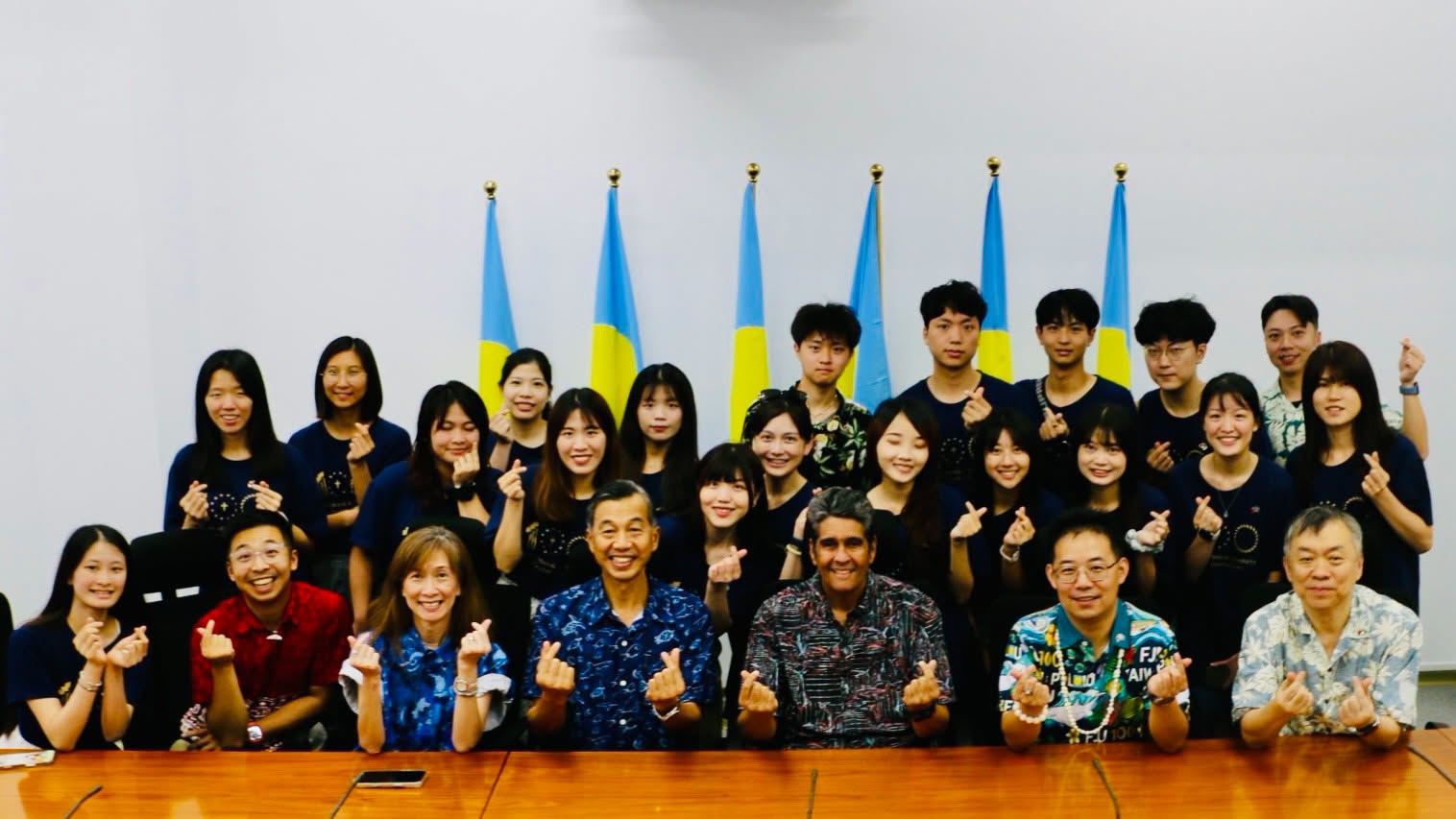
During the program, the youth delegation visited Palau's National Hospital and the Health Care Fund office, and were received in person by Palauan President Surangel S. Whipps Jr. Besides, they held in-depth exchanges with former Minister of Health and current Health Care Fund committee chair Dr. Victor Yano, learning about Palau's healthcare system, the state of chronic disease, and public health policy.
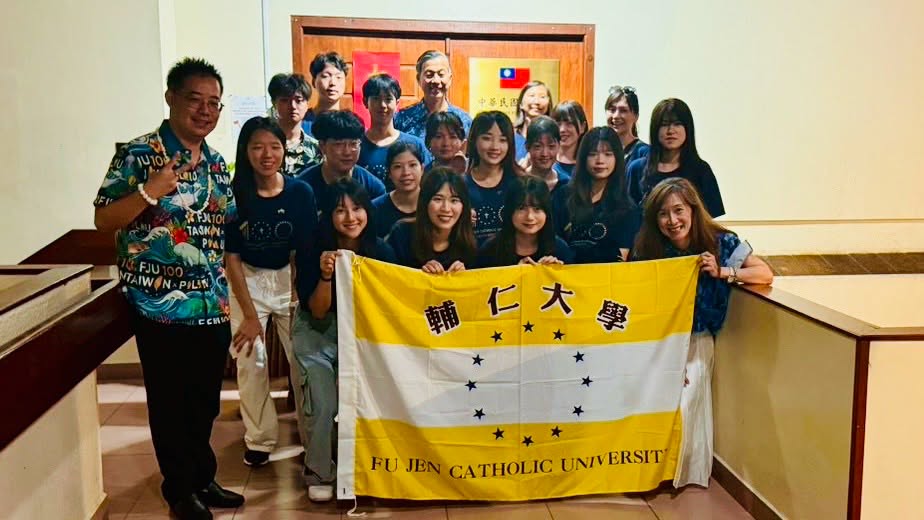
At the Embassy of the Republic of China (Taiwan) in the Republic of Palau, Ambassador Chen Kang-I encouraged the young people to step into the world bravely. He noted that when young people in Taiwan are willing to step out of their familiar living environment and serve in a different culture, it isn’t only personal growth but also demonstrates Taiwan's most treasured humanistic spirit. Ambassador Chen expressed hope that they would become an important force in deepening Taiwan-Palau friendship.
Accompanied by Ambassador Chen, the team then visited the Palauan presidential office to brief the President on the program's core goals: through community screening on oral health, diabetes, and other chronic diseases, to help build a foundational health dataset for Palau, raise residents' health awareness, and leave behind a sustainable model for health promotion.
The young participants came to believe that genuine international cooperation isn’t a one-time medical service, but a journey of knowledge, methods, and capacity for local communities to keep the work going independently.
"Hello, we are students from Taiwan.”
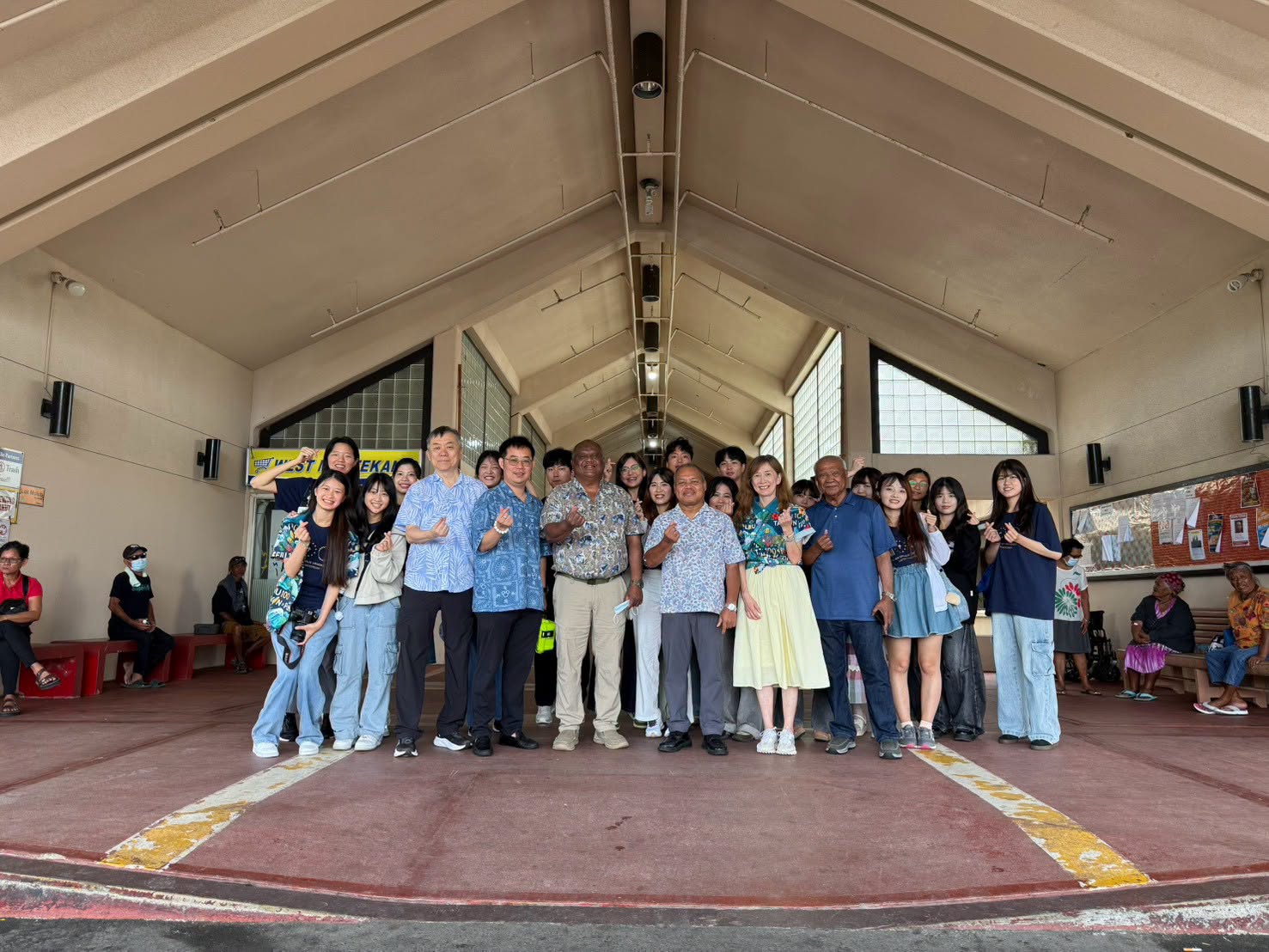
Every morning, the sixteen young people put on yellow vests and held an orange, pineapple-cake-shaped package with pineapple cake from Taiwan in it. We walked into neighborhoods, supermarkets, clinics, and streets. A simple greeting of "Alii" became the beginning of every new connection.
Some residents stopped to share their own health stories; others invited family members to be interviewed; still others smiled and said, "Thank you for coming for us.”
These simple and daily interactions became the participants' most lasting memories — because they realized that public health is never just cold data, but a collection of real human stories.
Four Lessons, More Vivid Than Any Textbook
During the fourteen-day practice, the young participants came to redefine what "health" means.
The first lesson was the preciousness of medical resources
Palau has only one public hospital. Many residents shared that follow-up care after a clinic visit is often lacking, specialist resources are limited, and serious illnesses frequently require referral overseas.
For the first time, the participants truly understood that access to healthcare is not something to be taken for granted — it is a form of good fortune.
The second lesson was respect for culture
Betel nut is an important symbol of Palauan culture. Many residents are well aware of the health risks that come with chewing betel nut, yet continue the practice out of cultural identity.
The young participants began to rethink that the goal of public health isn't to change culture, but to walk alongside residents — within a framework of cultural respect — toward healthier ways of living.
The third lesson was building trust
More important than completing an interview was earning a resident's willingness to open their heart.
We communicated in the simplest English. When English fell short, a smile, a look, or a gesture carried the conversation instead. What truly crosses cultural boundaries is sincerity from the bottom of the heart, not language.
The fourth lesson was the power of community
The responsibility of healthcare in Palau doesn’t fall on the hospital alone. Family, neighbors, church, and community all come together to support those in need of care, often blending in local remedies such as herbal and music therapy.
The participants felt deeply that health is not one person's burden, but what a family and a community protect together.
Medical treatment, they realized, is not only about treating illness — it is about accompaniment.
"We thought we came to help Palau.”
"But in the end, we realized it was us who were changed.”
We learned to slow down, to listen, and to understand life anew through a different cultural perspective.
Medicine is not about arriving with the known answers — it is about humbly stepping into someone else's life.
What truly matters is not how much we did, but how long we were willing to stay by someone's side.
Youth is Taiwan's finest calling card.
Fourteen days may be short, but for these 16 young people, this is a journey that will accompany them for the rest of their lives.
They brought Taiwan's expertise and warmth to Palau and carried home the smiles, trust, and touching moments that stayed with the Palauan people.
This was more than an overseas public health interview and screening — it was a cross-cultural and humanistic exchange based on human connection.
In the future, the GRACE Practicum will continue to share its experience in Palau through research, social media influence, and continued action, encouraging more young people to engage in global health and international cooperation, and carrying Taiwan's goodwill and expertise out into the world.
The force that truly changes the world does not always come from politics — it comes from small, sincere, daily-life interactions.
In the summer of 2026, a group of young Taiwanese stepped bravely outside their comfort zone, willing to kneel and listen to the stories of strangers on a beautifully blue island nation.