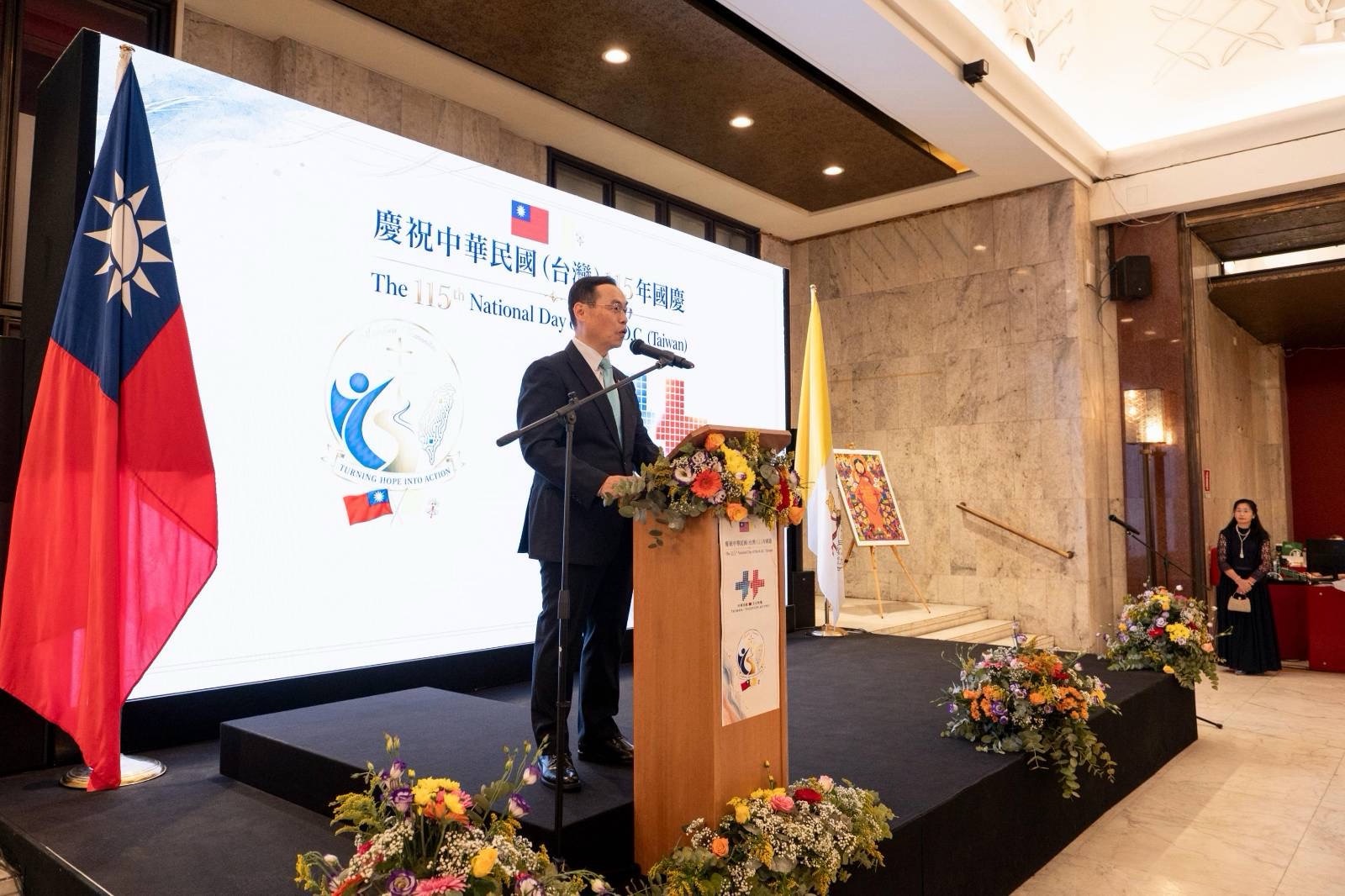
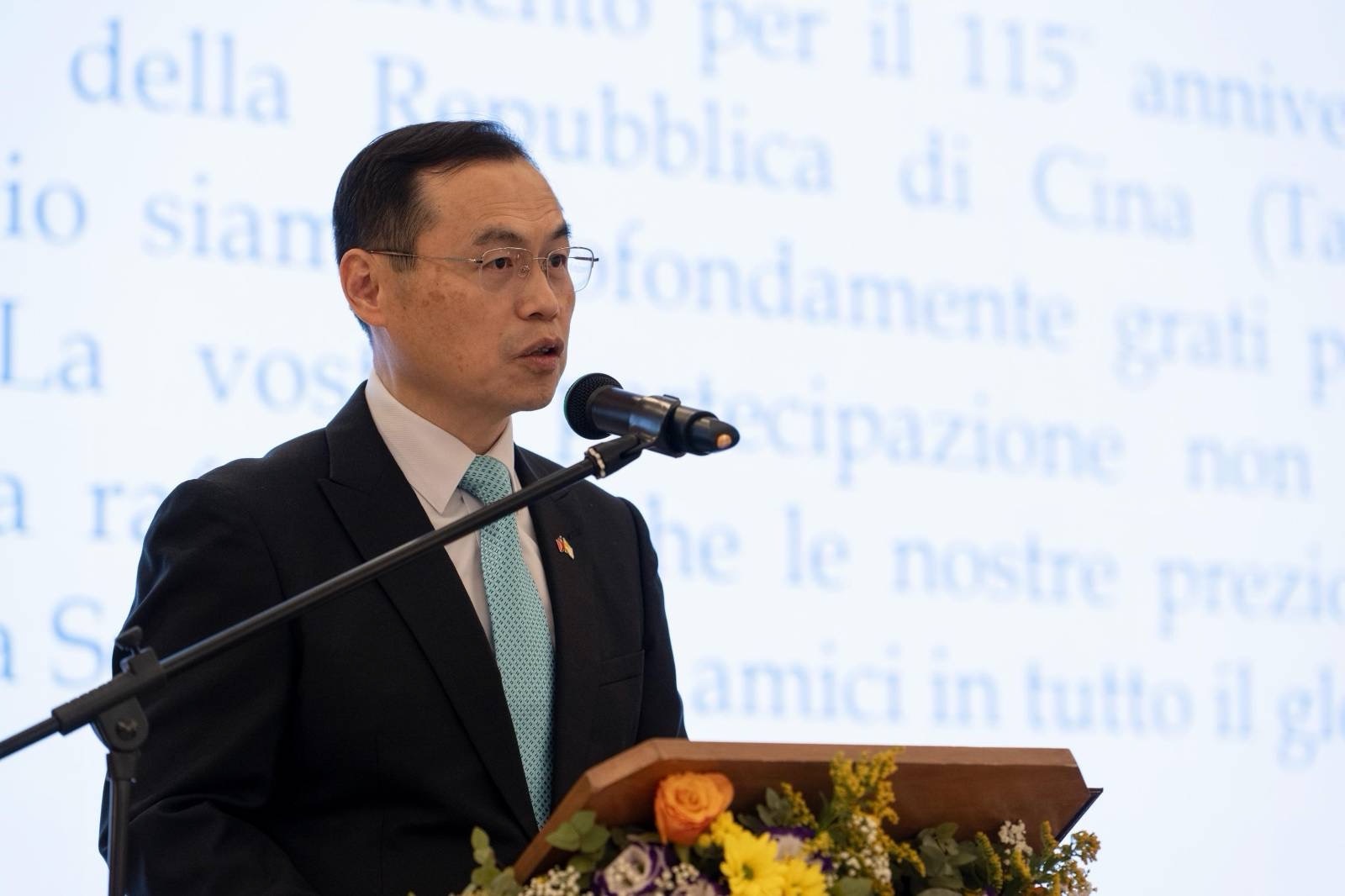
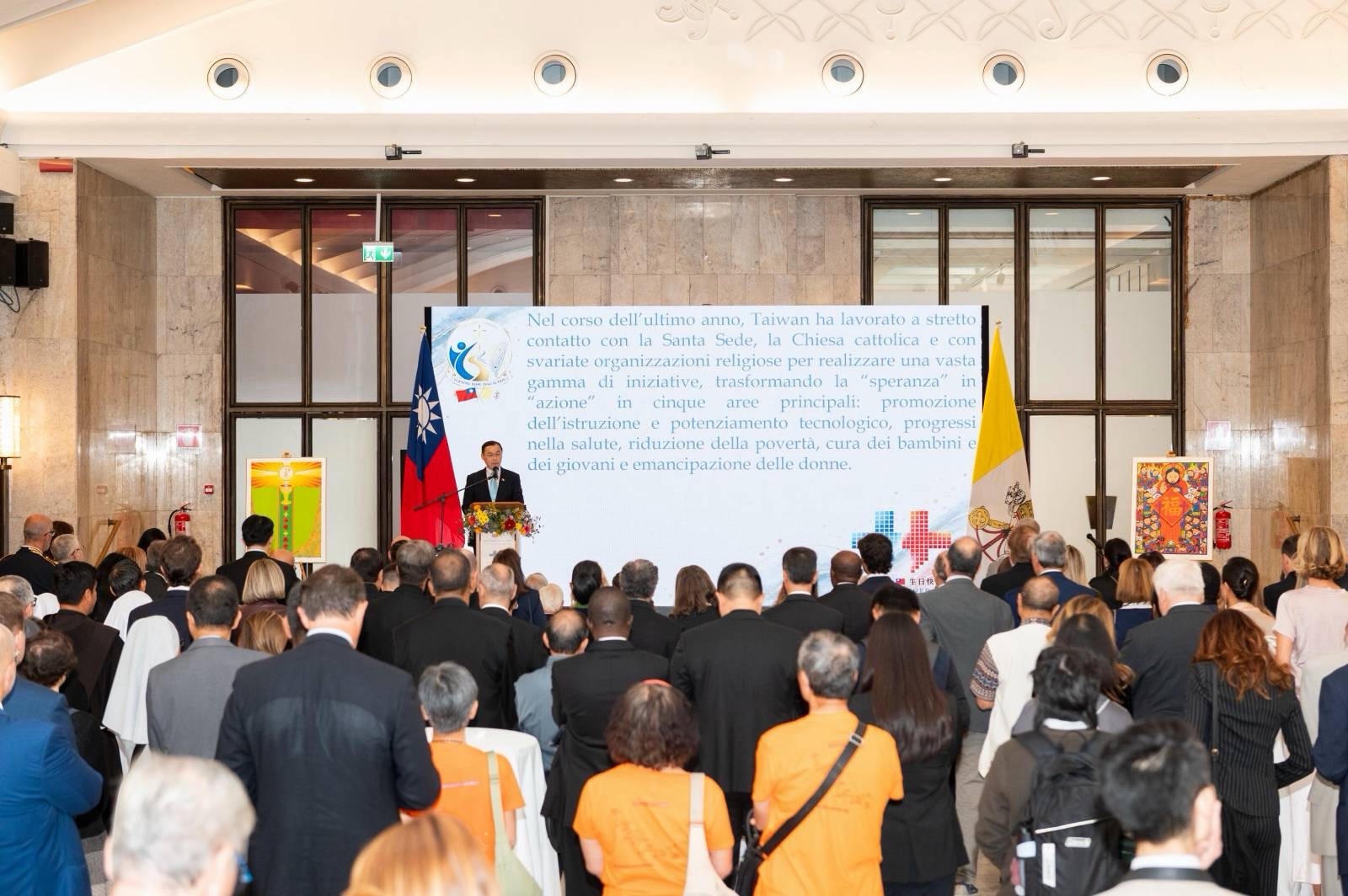
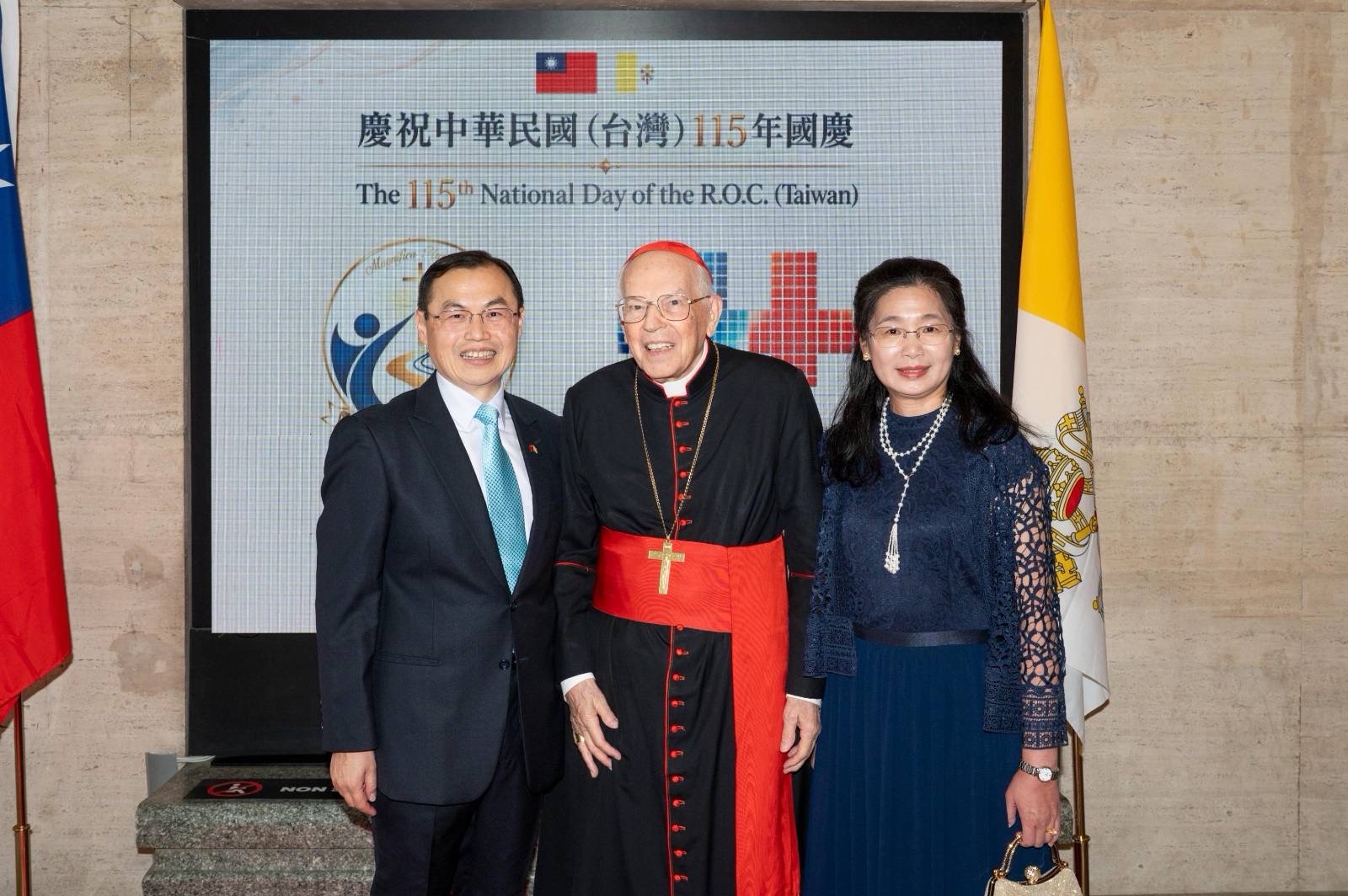
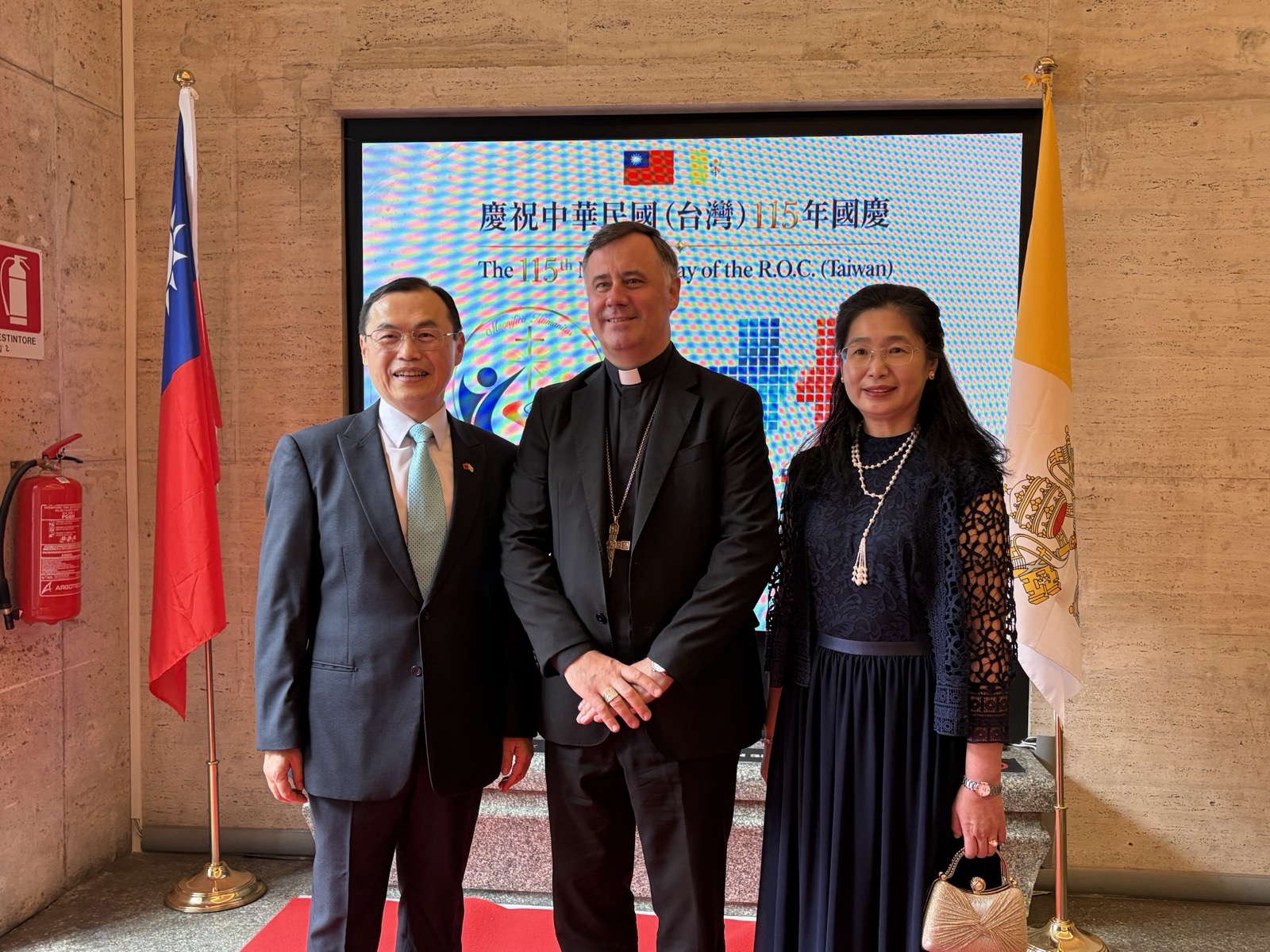
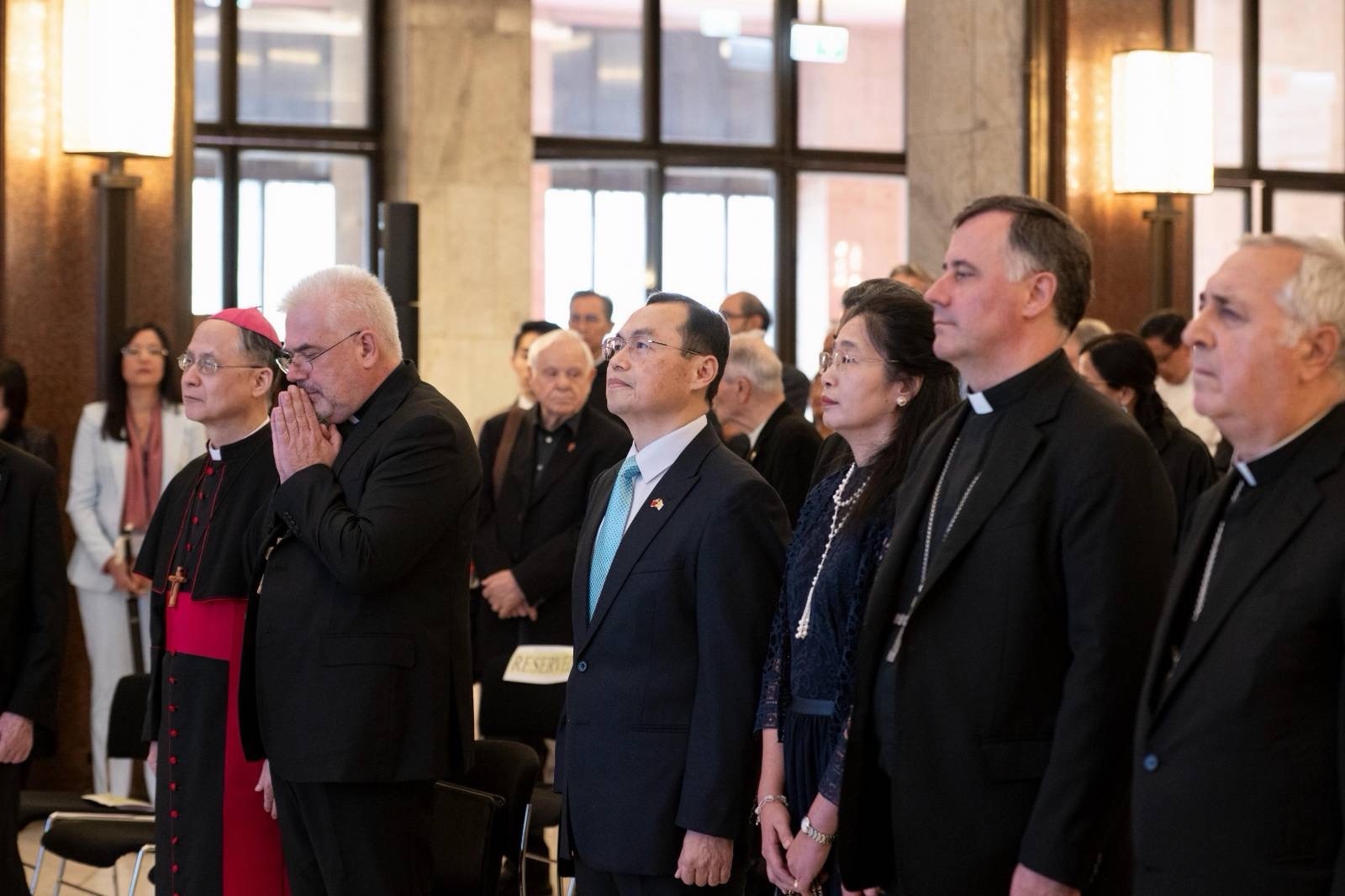
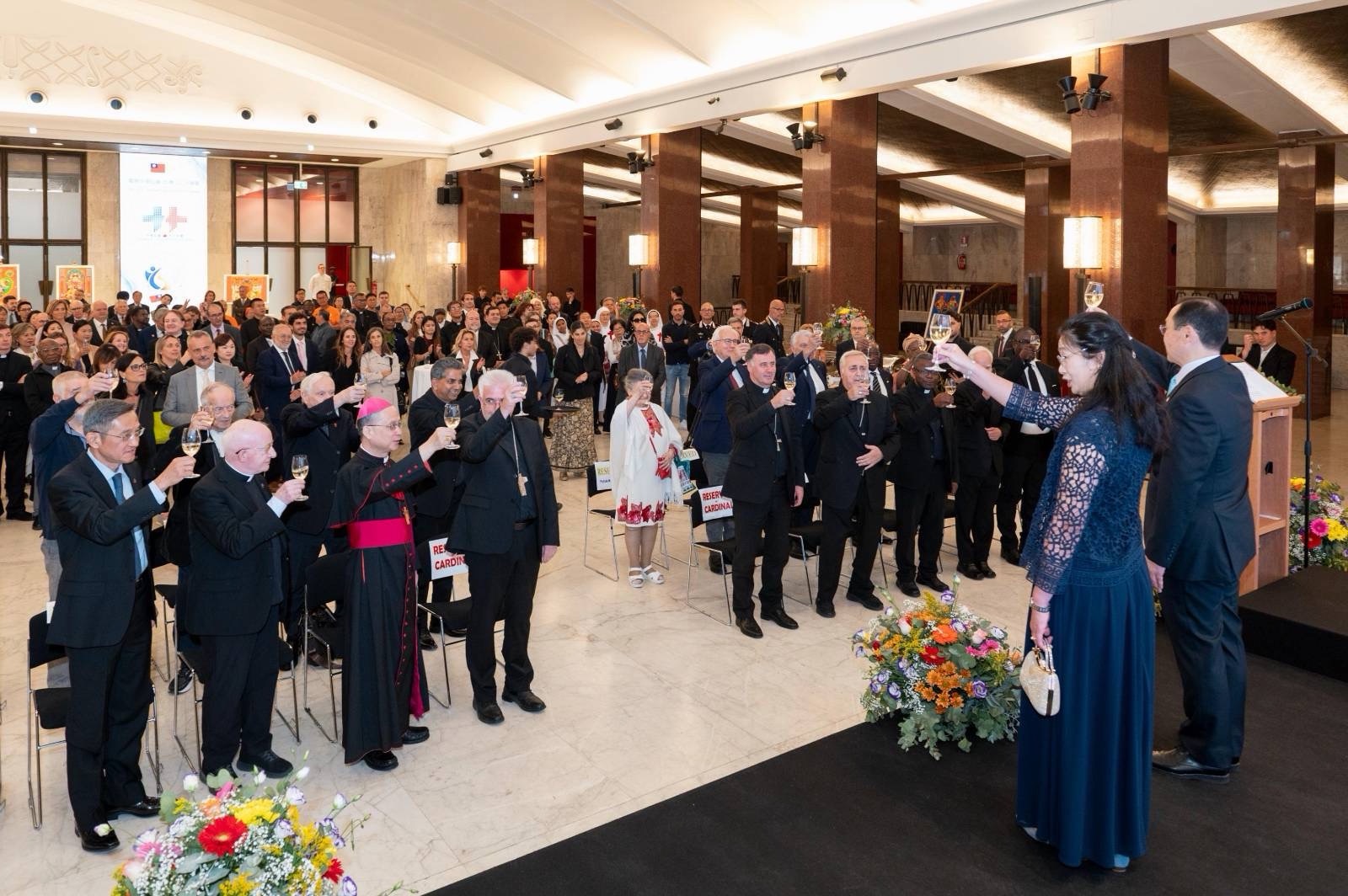
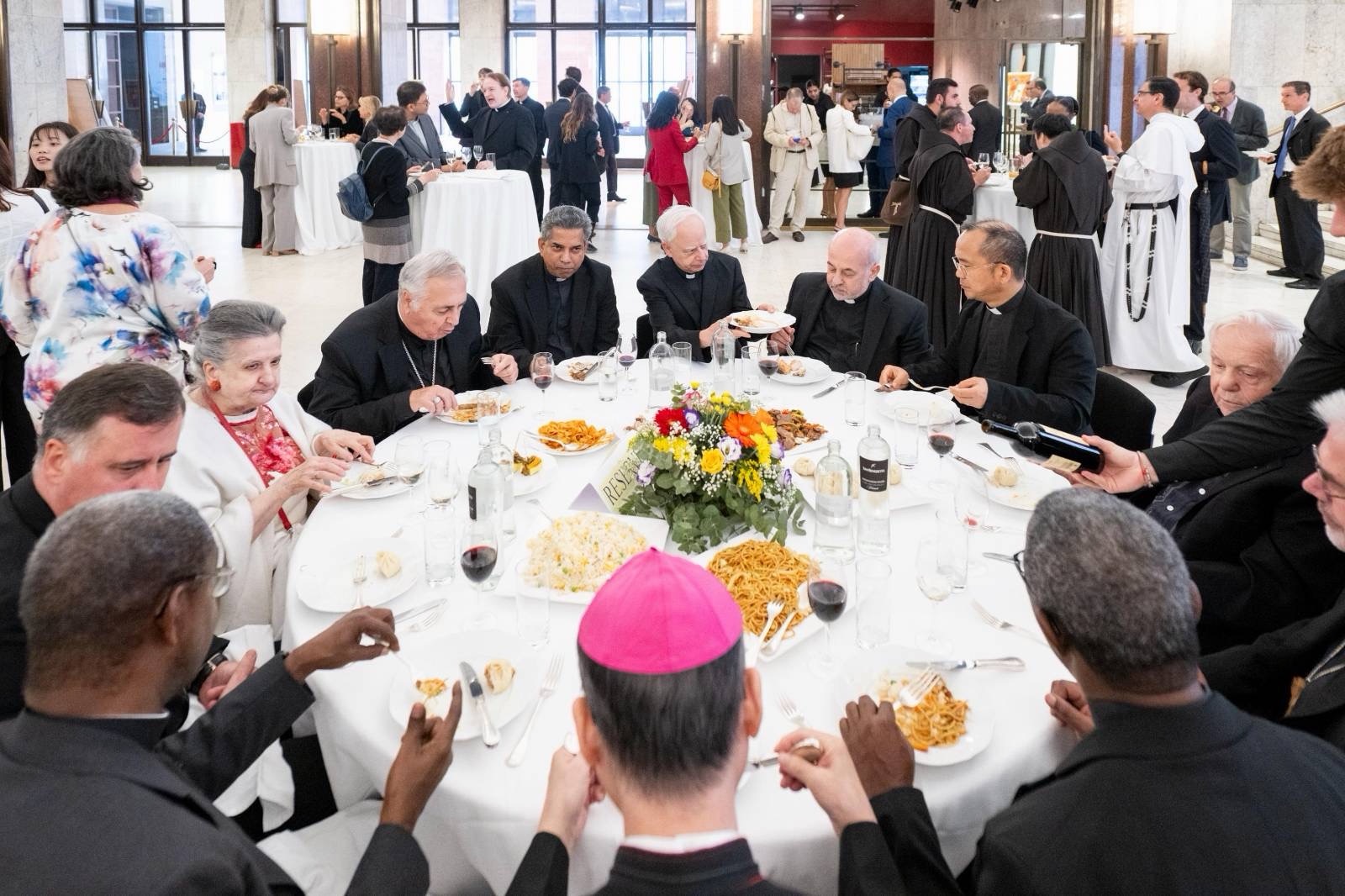
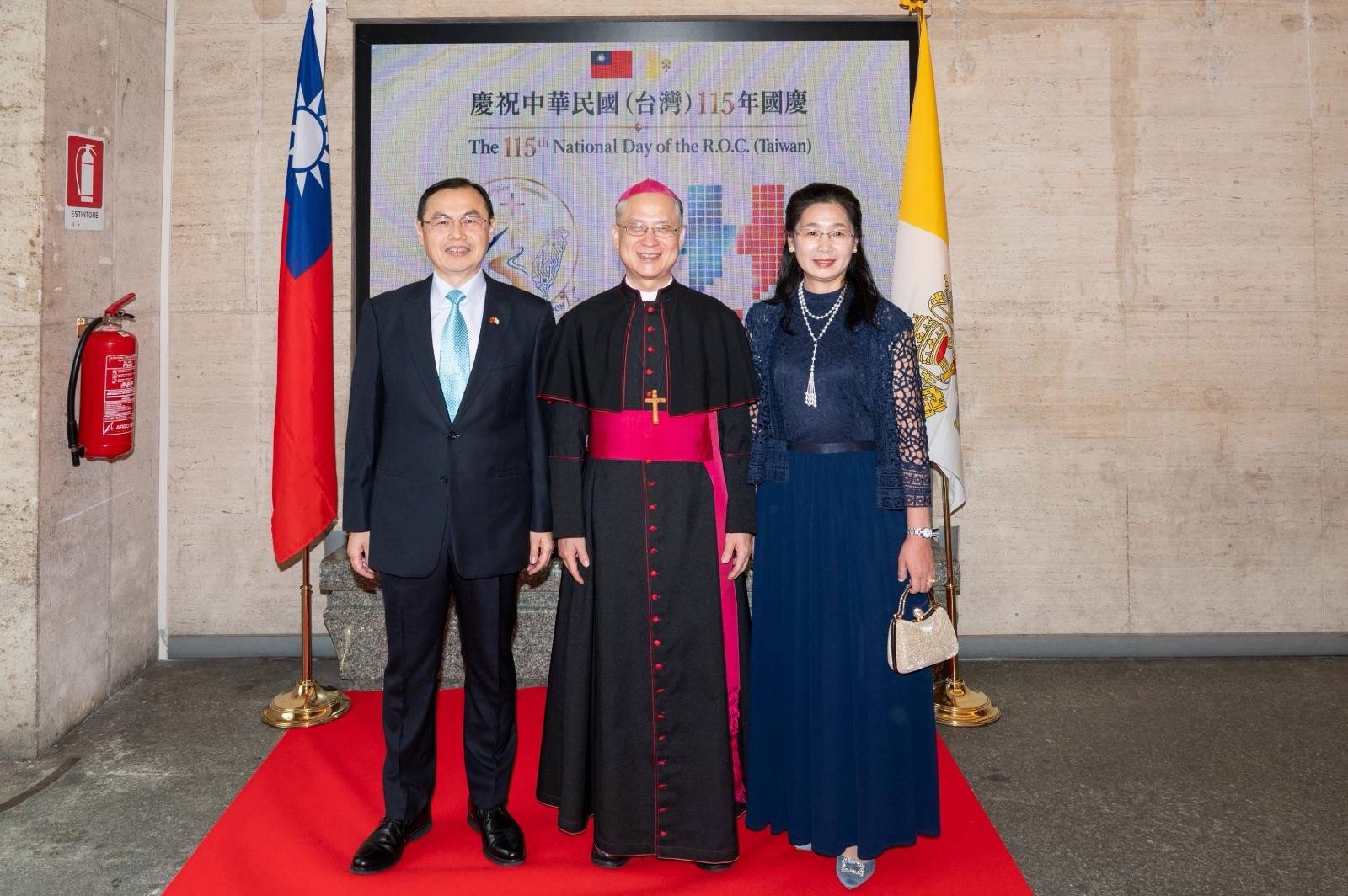
The Embassy of the R.O.C. (Taiwan) to the Holy See hosted a reception at noon on October 7 at the Auditorium della Conciliazione in Rome to celebrate the 115th National Day of the R.O.C. (Taiwan). Ambassador Anthony C. Y. Ho and Madam Ho presided over the reception, which was attended by more than 200 distinguished guests, including Cardinal Giovanni Battista Re, Dean of the College of Cardinals, other Cardinals, officials of the Holy See, representatives of Catholic religious orders, clergy from various fields, members and representatives of the Diplomatic Corps accredited to the Holy See, members of the overseas Taiwanese community, Italian friends from various sectors, and members of the media.
In his remarks, Ambassador Ho noted that 2026 holds special historical significance for Taiwan and the Catholic Church. Four hundred years ago, in 1626, St. Peter’s Basilica was officially completed, becoming an important symbol of faith, unity, and hope for the Catholic Church throughout the world. In the same year, Dominican missionaries arrived in Taiwan, opening a historic chapter in the encounter between the Gospel and Taiwanese society. Over the past 400 years, the Catholic Church has made significant contributions to education, healthcare, social services, and care for the disadvantaged in Taiwan, becoming a trusted partner of Taiwanese society. Taiwan, in turn, has continued over the years to work hand in hand with the Holy See and the Catholic Church in Asia and around the world, contributing to efforts to uphold human dignity and assist those in need.
Ambassador Ho further noted that 2025 was the Jubilee Year of Hope of the Catholic Church. Following his arrival in Rome, he adopted the four-letter acronym “H.O.P.E.” as a framework for the Embassy’s work: Humanity, Opportunity, Partnership, and Encounter. These four pillars have served as important directions for deepening cooperation between Taiwan and the Holy See, as well as between Taiwan and the Catholic Church.
Over the past year, Taiwan has worked together with the Holy See, the Catholic Church, and Catholic organizations to advance a number of humanitarian and development cooperation projects in five major areas: education and technology empowerment, health advancement, poverty alleviation, care for children and youth, and women’s empowerment. These partnerships have extended from Rome to other cities in Italy, and further to other countries in Europe, the Middle East, and Africa, allowing care and solidarity to cross borders. More than 50,000 people have benefited from these initiatives, making hope visible and tangible—from classrooms to clinics, from parishes to the peripheries. Ambassador Ho emphasized that these experiences have demonstrated that when hope is shared, it becomes a source of strength; and when love is put into action, it can transform lives.
Ambassador Ho also noted that, in the face of rapidly changing global political, economic, and security challenges, Taiwan remains committed to peace, stability, and democracy, while actively promoting economic and technological innovation. In May this year, Pope Leo XIV promulgated his first encyclical, Magnifica Humanitas, highlighting the human and ethical challenges arising from the rapid development of Artificial Intelligence (AI). President Lai Ching-te of Taiwan has likewise emphasized on numerous occasions that the development of AI should uphold ethics, democracy, and inclusion, so that technological progress can genuinely benefit everyone and leave no one behind.
Looking to the future, Ambassador Ho stated that Taiwan and the Holy See are not only partners in shared values, but can also become partners in shaping a shared future—building bridges between technology and ethics, creating opportunities through innovation, and serving humanity through solidarity.
Ambassador Ho stressed that the core message conveyed by this year’s National Day Reception was to build on 400 years of shared history, remain connected by shared values, and move toward a shared future through concrete cooperation. Four hundred years ago, Dominican missionaries arrived in Taiwan, and Taiwan and the Catholic Church encountered one another through the Gospel. Four hundred years later, Taiwan is once again setting out from Rome together with the Holy See and the Catholic Church, bringing hope to more places around the world where it is needed.
In his concluding remarks, Ambassador Ho said that Taiwan will continue to walk hand in hand with the Holy See and the Catholic Church, turning H.O.P.E. into action together. He also expressed the hope that friendship will grow, solidarity will flourish, and love will shine forth from Rome to the world; and that Rome may become a Home—a Home where friendship grows, solidarity flourishes, and love shines forth to the world.
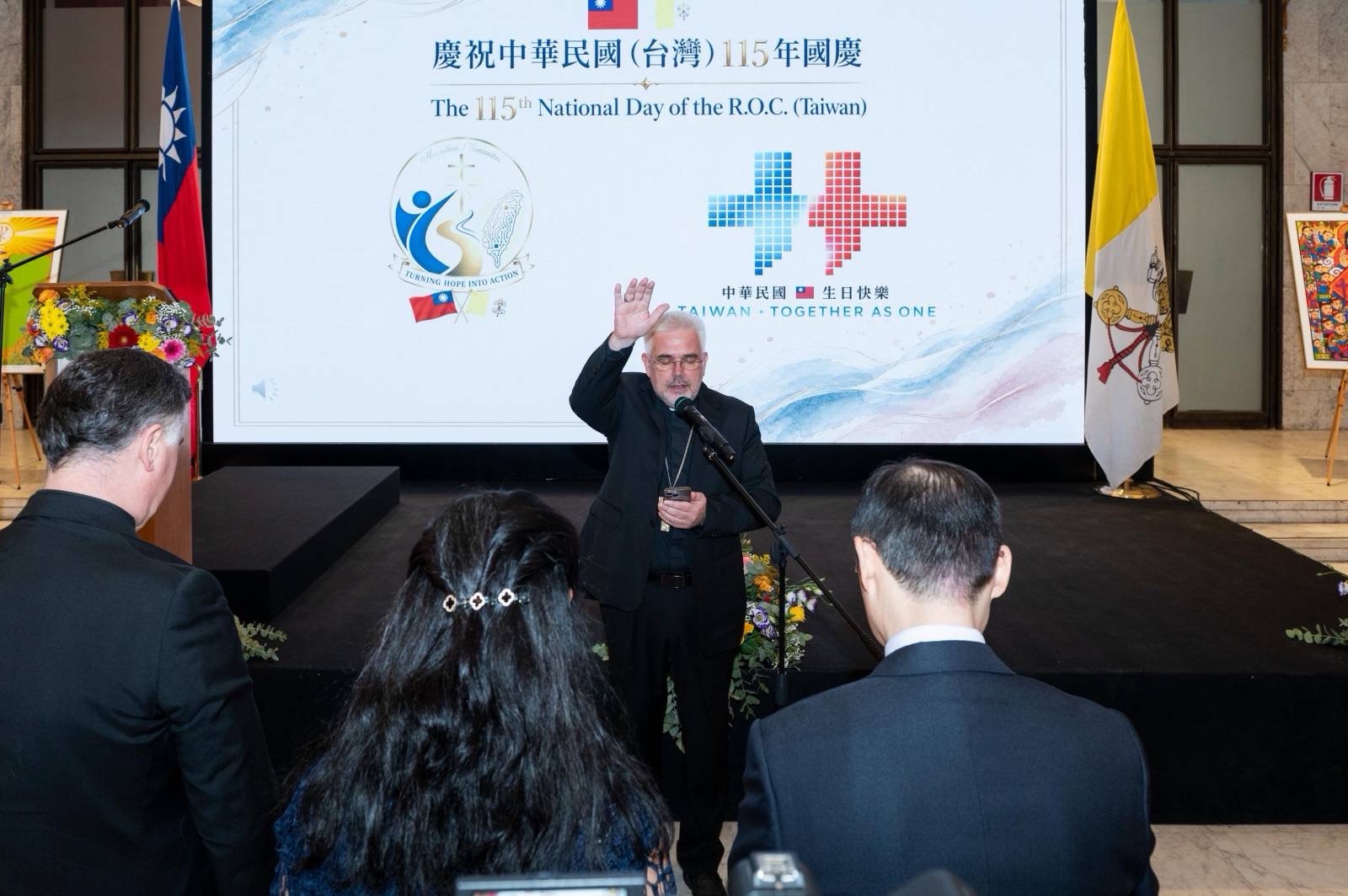
During the reception, Cardinal Fabio Baggio, Pro-Prefect of the Dicastery for Promoting Integral Human Development, led the guests in prayer, asking God to grant peace to Taiwan and bless the people of Taiwan.
The main visual design of the National Day Reception conveyed the message of building on the 400 years of shared history between Taiwan and the Catholic Church, connecting through shared values, and moving together toward the future of the AI era through concrete cooperation.
To echo the central theme of “Turning H.O.P.E. into Action,” the Embassy compiled the results of its cooperation over the past year and more into a video, which was screened during the reception. The video also featured messages of congratulations and goodwill from Taiwan’s partners in Africa.
The reception also featured works by Taiwanese artist Professor Hsieh Sheng-Min, whose art combines Catholic faith with elements of Taiwan’s traditional culture. The exhibition paid tribute to Professor Hsieh’s contributions to contemporary religious art and to artistic and cultural exchanges between Taiwan and the Holy See. The artworks and the Embassy’s cooperation initiatives were warmly received by the guests, who expressed their appreciation and left a deep impression.